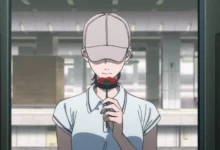
Love, Chunibyo & Other Delusions! Anime Series Episode 1: Chance Encounter… with Wicked Lord Shingan (2012) – Weebz Club Score: 9/10 “Embracing the Delusion: Episode 1 introduces Yūta Togashi’s attempt to shed his embarrassing past and his fateful encounter with Rikka Takanashi, a girl fully immersed in her own fantastical “delusions,” setting the stage for a hilarious and heartfelt exploration of growing up and accepting oneself.”

- Key Facts: In the inaugural episode, “Chance Encounter… with Wicked Lord Shingan,” Yūta Togashi endeavors to leave his past “chunibyo” (eighth-grader syndrome) phase behind him as he begins high school. His aspirations for a normal life are immediately challenged by Rikka Takanashi, a transfer student who is deeply entrenched in her own elaborate delusions. Their humorous and awkward meeting forms the central conflict and comedic engine of the episode.
- An Overwhelmingly Charming Delusion: The episode is met with an enthusiastic “O M G,” primarily due to what we describe as an “unbelievable amount of top-tier charming delusions.” The creative execution of these fantastical beliefs is highlighted as the episode’s standout strength, immediately drawing viewers into its unique world.
- Rikka Takanashi: The Embodiment of Delusion: Rikka Takanashi is unequivocally identified as “THE definition of delusions,” and her performance in embodying this character we praise as “extremely, extremely well.” Her commitment to her fantastical persona is a key element that drives the humor and charm of the episode.
- The Eyepatch: Cringy Yet Charming: While Rikka’s iconic eyepatch is noted as being “a bit cringy,” the review acknowledges that it ultimately “adds a bit to her charming delusions at the end.” This suggests that even the potentially awkward elements are integrated in a way that enhances her overall character and the episode’s unique appeal.
- Viewer Engagement Through Delusion: The episode’s masterful portrayal of these “well made delusions” is seen as a guaranteed way for viewers to love it. This strong connection forged through shared amusement and appreciation for the imaginative world-building earns the episode a high score of 9 out of 10.

The Reluctant Escapee and the Unyielding Delusionalist
The narrative of Love, Chunibyo & Other Delusions! kicks off with Yūta Togashi’s determined effort to forge a new identity in high school. Haunted by his embarrassing past as a chunibyo – a phase characterized by the delusion of possessing supernatural powers – Yūta seeks a clean slate, aiming for a life of normalcy and maturity. His meticulously planned escape from his former persona is, however, destined to be short-lived. The universe, it seems, has a penchant for irony, and Yūta’s attempt to bury his delusions is immediately juxtaposed with the vibrant, unyielding reality of Rikka Takanashi.
Rikka enters Yūta’s life not as a fellow escapee, but as its very antithesis. She is a character fully immersed in her own elaborate world of fantasy, complete with a distinct “Wicked Lord Shingan” persona. Their chance encounter, described as humorous and awkward, is the spark that ignites the series’ central dynamic. Yūta, desperately trying to leave his delusional past behind, finds himself inexplicably drawn into Rikka’s fantastical orbit, setting the stage for a clash of realities that is as comical as it is potentially poignant.
A Symphony of “Charming Delusions”
The episode’s overwhelming success, as evidenced by the fervent “O M G,” can be attributed to its “unbelievable amount of top-tier charming delusions.” This isn’t merely a superficial presentation of fantasy; it’s a deeply embedded aspect of the narrative and characterization. Rikka Takanashi is presented as the living embodiment of this concept. Her actions, her dialogue, and her very presence are steeped in a self-created reality that is both audacious and endearing. The way she navigates the mundane world with her fantastical worldview is a source of constant humor and a testament to the creative vision behind the series.
The episode excels at making these delusions not just acceptable, but genuinely lovable. The viewer is invited to suspend disbelief and embrace the absurdity alongside Yūta, even as he internally cringes. Rikka’s commitment to her persona, her conviction in her “Wicked Lord” identity, is played for maximum comedic effect, yet it also hints at an underlying vulnerability or a coping mechanism. The famous eyepatch, while acknowledged as a bit cringy, is cleverly integrated. Instead of being a purely awkward element, it becomes a symbolic accessory that, in the context of her “charming delusions,” adds a layer of mystique and character. It’s this masterful balancing act – making the cringy endearing and the fantastical relatable – that solidifies the episode’s impact.

A Bond Forged in Fantasy: The Core of the Series
The narrative skillfully sets up a relationship between Yūta and Rikka that is founded on this very contrast and intersection of their views on delusion. Yūta’s desire for normalcy clashes with Rikka’s unwavering embrace of fantasy, creating immediate comedic friction. However, beneath the surface of awkward interactions and exaggerated pronouncements lies the potential for understanding and acceptance. The episode suggests that Yūta, despite his efforts to deny it, might still possess a flicker of the chunibyo spirit, making him uniquely positioned to understand, and perhaps even connect with, Rikka.
The episode’s strength lies in its ability to make these “well made delusions” not just entertaining but compelling. It’s a testament to the writing and animation that viewers are not just amused but actively root for the characters and their peculiar circumstances. This strong emotional and comedic resonance, driven by Rikka’s unforgettable portrayal and the unique concept of chunibyo, makes the episode a resounding success. The earned 9 out of 10 score reflects an experience that is not only enjoyable but also memorable, effectively capturing the essence of growing up, accepting oneself, and perhaps, finding a bit of magic in the mundane.