Street Fighter II [Arcade Game] – Info, Main Characters, Gameplay Mechanics

Japanese Title: ストリートファイターII (Sutorīto Faitā Tsū)
Year of Release: 1991
Origin: Japan
Platform: Arcade, others
Modes: Single Player, Multiplayer
Series: Street Fighter
Developer: Capcom
Publisher: Capcom
Other Related Arcade Games: Street Fighter 5 Arcade Edition (2018), Super Street Fighter IV Arcade Edition (2010), Street Fighter III 3rd Strike (1999), Street Fighter Alpha 3 (1998), Street Fighter III (1997), Super Street Fighter II Turbo (1994)
Facts: The impact of Street Fighter II was nothing short of colossal. It became the best-selling game since the golden age of arcade video games, captivating an estimated 25 million people in the United States alone by 1994. Globally, over 200,000 arcade cabinets and an astounding 15 million software units across all its versions were sold, generating an estimated $10 billion in revenue. As of 2017, it stood as one of the top three highest-grossing video games of all time and held the title of the best-selling fighting game until 2019. On the Super Nintendo Entertainment System, over 6.3 million cartridges were sold, making it Capcom’s best-selling single software game for two decades and the highest-selling third-party game on the SNES.
Far transcending its predecessor’s reception, Street Fighter II became a bona fide pop culture phenomenon, frequently hailed as one of the greatest video games ever created. Its importance and influence on the fighting game genre are immeasurable; its launch is widely credited with popularizing the genre throughout the 1990s and inspiring countless other developers to forge their own fighting game series.
Overview
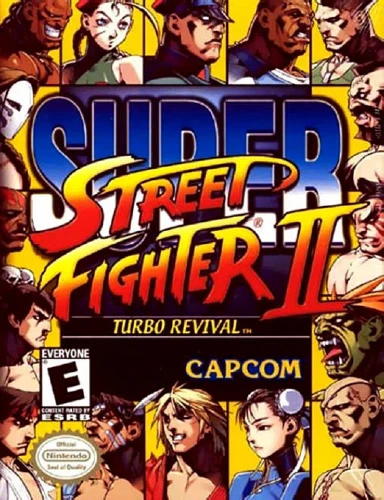
Street Fighter II: The World Warrior, released in 1991, is a seminal fighting game developed by Capcom. It stands as the second main installment in the legendary Street Fighter series and is unequivocally credited with popularizing the fighting game genre, forever changing the landscape of competitive gaming.
Game Plot
The narrative of Street Fighter II is set against the backdrop of the “Second World Fighting Tournament,” a global martial arts competition of immense prestige. Players select from a diverse roster of skilled fighters, each hailing from different corners of the world and possessing unique motivations for entering this fierce tournament. Some seek to test their mettle against the world’s best, others yearn for honor and glory, while many are driven by a burning desire for revenge against rivals or the shadowy organization that orchestrates the event. The core characters, including the wandering martial artist Ryu, his spirited American rival Ken Masters, the determined Interpol agent Chun-Li, and the formidable Brazilian warrior E. Honda, are all vying for supremacy. Each character’s journey is distinct, shaped by their individual backstories, their unique fighting styles, and the personal quests that have led them to the world’s most challenging fighting stage.

Main Characters
Street Fighter II presents a vibrant cast, each with unique fighting styles and established backgrounds.
Character Overview
| Character | Fighting Style | Description |
|---|---|---|
| Ryu | Karate | A dedicated karate master striving for ultimate mastery in combat. |
| Ken | Karate | Ryu’s rival, distinguished by his flamboyant style and competitive spirit. |
| Chun-Li | Kung-Fu | A swift and powerful kung-fu expert driven by a strong sense of justice. |
| Guile | Military Fighting | A resolute military fighter known for his direct approach and iconic hairstyle. |
| Zangief | Wrestling | The “Red Cyclone,” a formidable Russian wrestler. |
| Dhalsim | Yoga | A yoga master with remarkable stretching abilities, posing a unique challenge. |
Gameplay Mechanics
Street Fighter II laid the groundwork for countless fighting games to follow, introducing core mechanics that defined the genre:
- Character Selection
- Players are presented with a selection of eight iconic main characters, each endowed with unique abilities, distinct special moves, and individual fighting styles. From the stoic karate of Ryu and Ken to the lightning-fast kicks of Chun-Li and the sumo prowess of E. Honda, each character offers a vastly different gameplay experience.
- The game supports one-on-one battles, allowing players to test their skills against a series of increasingly challenging AI-controlled opponents or engage in direct, exhilarating matches against other human players.
- Combat System
- The gameplay is defined by its innovative use of command-based special moves. Players must learn specific joystick and button combinations to unleash devastating attacks like the Hadoken, Shoryuken, and Sonic Boom, a system that was revolutionary for its time.
- Beyond special moves, players can execute a wide array of standard attacks, including punches and kicks of varying strengths, powerful throws, and strategic blocking.
- Perhaps its most groundbreaking contribution was the introduction of a rudimentary combo system, allowing skilled players to chain together multiple attacks in rapid succession for increased damage, a mechanic that would become a cornerstone of fighting game design.
- Game Modes
- Single-player Mode: Players embark on a career through the tournament, facing a gauntlet of AI-controlled opponents, each representing a different nation and fighting style, culminating in a battle against the four Shadaloo bosses.
- Multiplayer Mode: The true heart of the arcade experience, this mode pits two human players against each other in a direct, often fiercely competitive, showdown. This aspect was a massive draw for arcade patrons and fostered a vibrant community of players.
- Bonus Stages
- Interspersed between regular matches, players could engage in exhilarating bonus stages designed to test their reflexes and scoring ability. These included iconic challenges like “Break the Crate” and “Break the Car,” where players had to swiftly destroy a set number of objects within a time limit, earning extra points for their speed and efficiency.
Street Fighter II‘s masterful combination of engaging, accessible yet deep gameplay, an unforgettable cast of diverse characters, and compelling competitive mechanics set an unbreakable standard for future fighting games. It established a lasting legacy, solidifying its place not just as a game, but as a cultural touchstone in the history of the video game industry.