The King of Fighters ’98 [Arcade Game] – Info, Main Characters, Gameplay Mechanics
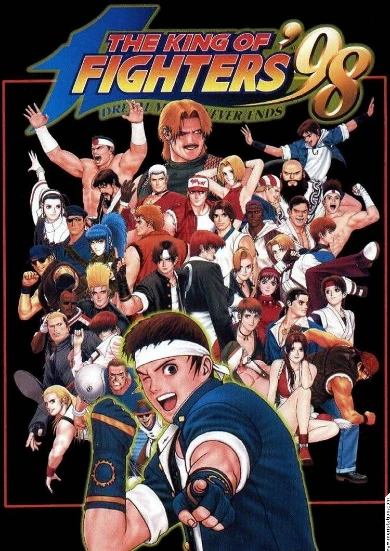
Japanese Title: ザ・キング・オブ・ファイターズ ’98 ドリームマッチネバーエンズ (Za Kingu Obu Faitāzu ’98 Dorīmu Matchi Nebā Enzu); lit. “The King of Fighters ’98 Dream Match Never Ends”
Year of Release: 1998
Origin: Japan
Platform: Arcade, others
Modes: Single Player, Multiplayer
Series: The King of Fighters
Developer: SNK
Publisher: SNK
Other Related Arcade Games: The King of Fighters XV (2022), The King of Fighters XI (2005), The King of Fighters Neowave (2004), The King of Fighters 2003, The King of Fighters ’99, The King of Fighters ’97
Facts: The King of Fighters ’98 was met with overwhelming critical and fan acclaim, consistently regarded as one of the finest installments in The King of Fighters series and a benchmark among fighting games of all time. Its expansive roster, balanced gameplay, and pure fighting focus garnered widespread praise. Both the original and its updated versions achieved significant sales in Japan.
Plot
The King of Fighters ’98, also recognized as The Slugfest or Dream Match Never Ends, is a legendary fighting game released by SNK in 1998. As the fifth installment in the prestigious King of Fighters series, it is celebrated as a definitive “dream match” game, deliberately eschewing a narrative plot. Instead, it showcases an unprecedented roster of beloved characters from previous King of Fighters titles, empowering players to craft their ultimate dream teams for an unparalleled tournament experience.

Main Characters
The King of Fighters ’98 features a broad spectrum of fighters, each distinguished by unique skills and combat methodologies.
Character Overview
| Character | Fighting Style | Notable Skills |
|---|---|---|
| Kyo Kusanagi | Kusanagi-style martial arts | Pyrokinetic abilities |
| Iori Yagami | Ancient martial arts + Kenpo | Rivalry with Kyo Kusanagi |
| Terry Bogard | Martial arts | Strong punches and kicks |
| Rugal Bernstein | Various martial arts | Powerful attacks, final boss |
| Shingo Yabuki | Martial arts | Unlocked mid-boss character |
| Benimaru Nikaido | Shoot boxing + electric techniques | Fast and agile attacks |
| Goro Daimon | Judo + personal combat style | Strong grappling techniques |
Notable Rivalries
- Kyo Kusanagi vs. Iori Yagami: This central rivalry underscores their contrasting styles and shared history, forming a key element of the game’s narrative.
- Rugal Bernstein: As the final boss, Rugal presents a formidable challenge, employing a potent array of moves and strategic tactics.
Additional Characters
The game also incorporates several characters from earlier installments, including:
- Vice and Mature: Teammates of Iori from KOF ’96.
- Heavy D!, Lucky Glauber, and Brian Battler: Members of the American Sports Team from KOF ’94.
- Heidern, Takuma Sakazaki, and Saisyu Kusanagi: Part of the “Old Men Team,” returning from KOF ’95.
Gameplay Mechanics
The King of Fighters ’98 offers a deep and strategic fighting system centered around character selection and dynamic combat:
- Character Selection and Team Formation: Assembling Legends:
- Players meticulously select three characters to form their formidable team. This core mechanic is central to the game’s strategic depth.
- The game allows for unparalleled freedom in mixing and matching characters from various established teams, such as the iconic Japan team, the Ikari Warriors, and the Fatal Fury team, greatly enhancing strategic options and creating unique team synergies.
- Game Modes: Two Paths to Victory:
- Advance Mode: This style is geared towards aggressive players who thrive on offense. The “Power Gauge” is built by executing special moves and by taking damage. When the gauge is full, players can enter a “MAX” state, significantly boosting their attack power for a short duration, enabling devastating offensive pressure.
- Extra Mode: This mode emphasizes defensive mastery and resource management. The “Power Gauge” is charged by successfully blocking attacks and by taking damage. A key feature of Extra Mode is the ability to manually “store” power, allowing players to save their gauge for crucial moments, though it leaves them temporarily vulnerable during the storage animation.
- Match Dynamics: The Flow of Battle:
- When a character is defeated and loses a round, the losing team receives a slight handicap in the subsequent round, often in the form of a slightly increased Power Gauge or other subtle advantages, designed to maintain competitive balance and provide opportunities for comebacks.
- The game boasts a diverse and extensive roster, featuring many characters who had been previously eliminated or whose story arcs had concluded in earlier titles, most notably the triumphant return of Rugal Bernstein, adding to the “dream match” allure.