Tamako Market Anime Series Episode 1: Tamako Market (2013) – Weebz Club Score: 7/10 “A Glimpse into a Charming District: “Tamako Market” introduces a cozy world and a likable protagonist, but the inclusion of an abrasive comedic element and narrative clutter slightly dims the potential of this heartwarming slice-of-life.”
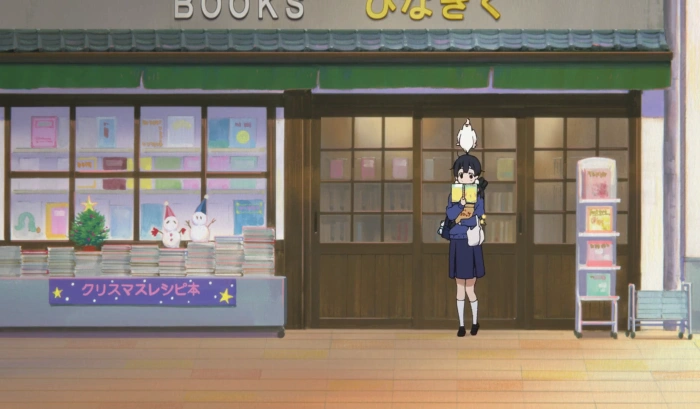
- Key Facts: Episode 1 of Tamako Market, titled “Tamako Market,” introduces Tamako Kitashirakawa, a cheerful high school girl and the daughter of a mochi shop owner in Kyoto’s Usagiyama Shopping District. The episode’s central unusual event is her encounter with Dera Mochimazzi, a peculiar, talking bird from a distant land.
- Series Context: The anime series serves as a prelude to the well-received film Tamako Love Story, suggesting an underlying narrative depth and emotional potential.
- Artistic Strengths: The episode showcases fine animation quality and effectively captures a cozy, welcoming atmosphere within the vibrant Usagiyama Shopping District, highlighting the beauty found in the everyday life of a close-knit community.
- Points of Contention: The primary criticisms focus on the character of Dera Mochimazzi, whose comedic antics are perceived as annoying and ill-fitting for the series’ generally joyful and cozy tone. Additionally, the episode occasionally suffers from a sense of narrative chaos, with too many disparate elements occurring simultaneously.
- Overall Impression: While Tamako herself is a promising protagonist, and the setting has significant charm, the first episode’s execution leaves room for improvement, resulting in a score of 7 out of 10.

The Heart of Usagiyama: Tamako and Her World
The first episode of Tamako Market efficiently establishes its protagonist, Tamako Kitashirakawa, as the bright, energetic heart of the Usagiyama Shopping District. Tamako embodies a particular kind of cheerful innocence, deeply rooted in her daily life as the daughter of a mochi shop owner. Her world is one of familiar routines, friendly neighbors, and the comforting scent of freshly made mochi. The animation skillfully brings this close-knit community to life, imbuing the shopping district with a palpable sense of warmth and vibrancy. Every shot of the market, from the bustling stalls to the familiar faces of the shopkeepers, conveys a feeling of belonging and a celebration of the small beauties found in everyday life. This cozy setup is undeniably appealing, promising a slice-of-life series that revels in the simple joys of community and personal connection.
Tamako herself is presented as a likable and relatable character. Her inherent optimism and dedication to her family’s mochi business make her an endearing lead. The episode successfully grounds her in this familiar, yet charming, reality, setting a peaceful and heartwarming tone. The visual representation of her life, from her school activities to her interactions with her family, reinforces the idea that the series will focus on the gentle rhythms of ordinary existence, elevated by genuine affection and a touch of whimsy.
An Unwelcome Intruder: Dera’s Jarring Arrival
However, the episode falters significantly with the introduction of Dera Mochimazzi. This talking bird, who arrives from a distant land with a seemingly important, yet ill-defined, mission, unfortunately becomes a source of irritation rather than comedic relief. While the intent is clearly to inject a unique, perhaps even satirical, element into the otherwise gentle narrative, Dera’s character comes across as abrasive, mannerless, and ultimately, jarringly out of place. His constant pronouncements, his critical observations about Tamako’s mochi-making, and his general air of entitlement clash starkly with the cozy, joyful atmosphere the series so carefully cultivates.
This dissonance between Dera’s abrasive personality and the serene backdrop of the Usagiyama Shopping District creates an unfortunate tonal imbalance. The satire or black comedy intended by the bird’s presence feels misplaced, disrupting the comforting flow of the narrative rather than enhancing it. Instead of adding a unique flavor, Dera’s constant interjections feel more like an annoyance, detracting from the genuine charm that Tamako and her surroundings offer. For a series that aims to find beauty in the small, everyday moments, the inclusion of such a grating character feels counterproductive, transforming potential moments of quiet joy into irritations.

Narrative Clutter and Unfulfilled Potential
Compounding the issue with Dera, the first episode occasionally feels chaotic due to the sheer number of disparate elements vying for attention. While establishing a rich setting and introducing key characters is essential, the pacing sometimes feels rushed, with too many plot points or character interactions being crammed into a short span. This can lead to a sense of narrative clutter, where the audience struggles to focus on the core elements that make the series potentially appealing. The establishment of the shopping district, Tamako’s daily life, her family dynamics, and the sudden, bizarre arrival of Dera, all compete for screen time, leaving the episode feeling somewhat unfocused.
Despite these shortcomings, the promise of Tamako Market isn’t entirely lost. Tamako herself remains a strong anchor, and the visual execution of the Usagiyama Shopping District is commendable, suggesting that the series possesses the potential for beautiful storytelling. The knowledge that this series serves as a precursor to the acclaimed Tamako Love Story further fuels the hope that the narrative will coalesce, finding a more consistent and fitting tone in subsequent episodes. The potential for a heartwarming and aesthetically pleasing slice-of-life experience is evident, but Episode 1 suggests that the journey to fully realizing that potential may require some narrative adjustments and a reevaluation of its comedic elements. This makes the initial offering a decent, yet flawed, introduction, earning it a 7 out of 10.