Strawberry Marshmallow Anime Series Episode 1: Matsuri Gets a New Classmate (2005) – Weebz Club Score: 8/10 “A Delightful Introduction to Whimsy: “Matsuri Gets a New Classmate” gracefully introduces a charming new dynamic to the “cute girls doing cute things” genre, offering a wonderfully joyful and worry-free slice of life experience, despite some room for animation refinement.”
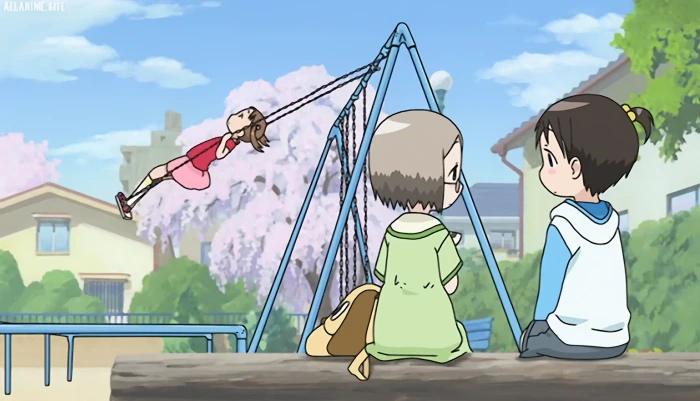
- Key Facts: Episode 1 of Strawberry Marshmallow (also known as Ichigo Mashimaro) introduces Ana Coppola, an English girl who joins the group of friends. Despite her apparent fluency, Ana playfully feigns ignorance of Japanese culture and language, setting up comedic scenarios.
- Genre Niche: The series firmly belongs to the “cute girls doing cute things” and comedic slice-of-life genre, aiming for a worry-free and joyful viewing experience.
- Artistic Nuances: While the character designs are endearing and the overall atmosphere is pleasant, the animation quality is noted as having room for improvement when compared to contemporary titans of the genre like Is the Order a Rabbit? or the atmospheric presentation of Non Non Biyori.
- Overall Sentiment: Despite minor critiques on animation polish, the episode is considered a very joyful and highly enjoyable watch, meriting an 8 out of 10 score.

A New Face, Familiar Charm: Welcoming Ana to the Fold
Strawberry Marshmallow Episode 1, “Matsuri Gets a New Classmate,” delivers exactly what fans of the genre expect: a gentle, heartwarming introduction to a group of charming young girls and the beginning of a new, delightful dynamic. The episode centers around the arrival of Ana Coppola, an English girl who becomes the newest member of their burgeoning circle. What immediately sets Ana apart, and serves as the primary engine for the episode’s humor, is her peculiar affectation: she pretends to know virtually nothing about Japan or its language, despite having lived in the country for a considerable five years. This deliberate performance of ignorance is not rooted in malice or deceit, but rather in a playful desire to engage with her new friends and perhaps to observe their reactions. It’s a setup ripe for comedic misunderstandings and awkward, yet endearing, interactions as Ana navigates her environment and the established personalities of her classmates.
The episode expertly uses Ana’s feigned unfamiliarity to create a series of light-hearted and genuinely funny moments. Her classmates, particularly the main group we’ve come to know, react with a mixture of confusion, amusement, and patience as Ana embarks on what seems to be a journey of discovery of her own country. This introduction of Ana doesn’t disrupt the established “cute girls doing cute things” vibe; instead, it enriches it, offering fresh avenues for the characters to interact and for their distinct personalities to shine. The core appeal of Strawberry Marshmallow has always been its focus on the innocent, worry-free lives of these girls, and Ana’s arrival fits seamlessly into this framework, promising more delightful antics and heartwarming connections.
The “Cute Girls Doing Cute Things” Landscape: Strengths and Comparisons
Strawberry Marshmallow occupies a well-loved niche within the anime landscape. The “cute girls doing cute things” (CGDCT) genre, often intertwined with iyashikei (healing) elements, caters to a desire for escapism and comfort. While there is a significant audience for such series, achieving true distinction and widespread acclaim can be challenging. Titles that excel in this space often manage to blend their charming character dynamics with exceptional production values and a unique atmospheric touch.
In this regard, Strawberry Marshmallow undoubtedly delivers on its core promise of a joyful and worry-free viewing experience. The inherent charm of the characters, their innocent interactions, and the gentle pacing make it a highly pleasant watch. However, when placed in comparison with other notable series within the genre, areas for potential enhancement become apparent. For instance, Is the Order a Rabbit? (Gochiusa) is often lauded for its exceptionally high animation quality and its intricately designed, whimsical cafés that serve as vibrant backdrops for the girls’ daily lives. Similarly, Non Non Biyori has carved out a significant reputation for its masterful presentation of a tranquil, almost meditative iyashikei experience, utilizing its rural setting and contemplative pacing to create a profound sense of relaxation.
While Strawberry Marshmallow possesses a distinct charm that resonates deeply, its animation quality, while perfectly functional and suiting the overall mood, doesn’t quite reach the same heights of polish or dynamism seen in these comparative titles. The character designs are endearing, and the expressions convey the intended emotions, but the fluidity of motion and the visual detail in certain scenes might feel slightly less refined to a viewer accustomed to the benchmarks set by its peers. This is not to say the animation is poor; rather, it’s an observation that in a genre where visual presentation is a significant part of the appeal, there was perhaps an opportunity for even greater artistic flourish.

A Joyful Experience, Despite Minor Quibbles
Despite the observations regarding animation quality in comparison to genre leaders, Episode 1 of Strawberry Marshmallow remains a profoundly joyful and highly recommended watch. The introduction of Ana is handled with a light comedic touch that perfectly aligns with the series’ established tone. Her playful deception creates natural opportunities for humor, and the way the other girls react is both believable and endearing. The core appeal of the series—its ability to deliver a comforting, worry-free slice of life—is fully intact.
The characters, though perhaps not as visually spectacular in motion as some others, are undoubtedly likable. Their simple interactions, their moments of childlike wonder, and the gentle ebb and flow of their days are what give the series its therapeutic quality. Episode 1 sets this tone beautifully, ensuring that viewers who are seeking a relaxing escape will find it here. The humor lands effectively, the relationships feel warm, and the overall experience is one of lighthearted contentment.
In conclusion, “Matsuri Gets a New Classmate” serves as an excellent entry point into the world of Strawberry Marshmallow. It successfully introduces a new character who immediately adds a fresh layer of comedic potential while maintaining the series’ signature blend of innocence and warmth. While the animation might not be as groundbreaking as some of its contemporaries, the episode’s undeniable charm, joyful atmosphere, and effective comedic timing make it a highly enjoyable and worthwhile watch for any fan of the slice-of-life genre, solidifying its well-deserved 8 out of 10 rating.