Arifureta Anime Series Episode 1: The Monster of the Abyss (2019) – Weebz Club Score: 8/10 “Betrayal in a New World: “The Monster of the Abyss” plunges viewers into a brutal fantasy realm where a betrayed high school student, Hajime Nagumo, is cast into an abyss to fight for survival, hinting at a dark yet potentially compelling journey of transformation.”
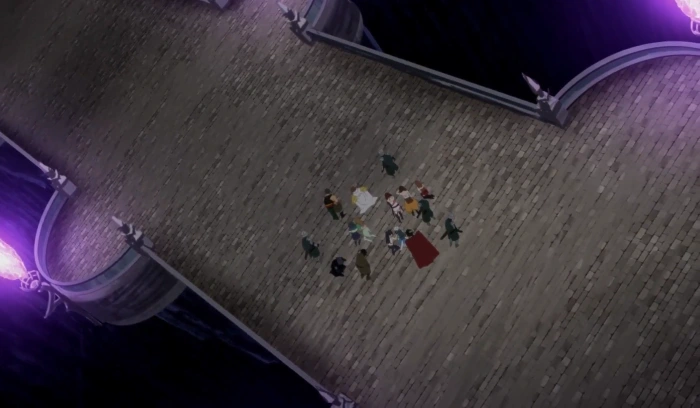
- Key Facts: Episode 1, “The Monster of the Abyss,” introduces Hajime Nagumo, a seemingly ordinary high school student, who, along with his classmates, is summoned to a fantasy world. During a dangerous dungeon exploration, Hajime is betrayed by a classmate and tragically cast into a monster-filled abyss, forcing him into a desperate fight for survival and self-improvement.
- A Bizarre Beginning: The episode’s start is described as “bizarre,” with Hajime’s immediate reliance on a gadget that displays power levels after consuming monster flesh being noted as “extremely childish and cringy.” This element introduces a divisive tone early on.
- Animation and Motion as a Saving Grace: Despite the awkwardness of certain narrative choices, the episode’s animation quality and fluid motion are highlighted as significant redeeming factors. This visual polish helps to carry the viewer through the initial, less engaging aspects of the story.
- The Appeal of Isekai Done Well: While the isekai genre is popular, the review emphasizes that execution is paramount. This episode, despite its flaws, hints at a potentially well-executed narrative through the introduction of promising characters and suggestions of positive story growth.
- Overall Sentiment: “The Monster of the Abyss” presents a jarring but ultimately promising start to Arifureta. The introduction of a dark betrayal and the grim struggle for survival, coupled with strong animation, somewhat overshadows the cringeworthy elements. The hints of future character development and narrative progression earn the episode a solid 8/10.

Summoned to a Savage Land: The Promise and Peril of a New World
The premise of Arifureta is immediately established with the classic isekai trope: a group of high school students are abruptly transported from their mundane lives to a fantastical realm. Among them is Hajime Nagumo, portrayed as a less remarkable student, overshadowed by his more charismatic and powerful classmates. This setup quickly establishes Hajime as an underdog, a character whose journey is ripe for transformation. The initial moments in this new world are filled with a sense of wonder and potential, a stark contrast to the horrors that are about to unfold.
However, the narrative takes a sharp and brutal turn during a dungeon raid. The camaraderie that might have been expected quickly dissolves into treachery. A classmate, driven by motives that remain opaque in this introductory episode, betrays Hajime, pushing him into a perilous abyss teeming with monstrous creatures. This act of betrayal is not merely a plot device; it is the catalyst that strips away Hajime’s perceived normalcy and forces him into a fight for his very existence. The abyss becomes a crucible, a place where survival is paramount and the only path forward is through relentless struggle.
A Cringeworthy Tool, a Visually Stunning Struggle
The episode’s initial moments are marred by a narrative choice that leans heavily into a perceived “childish” element: Hajime’s immediate acquisition of a gadget that allows him to see his power levels after consuming monster flesh. This aspect is explicitly called out as “extremely childish and cringy,” creating a somewhat jarring dissonance with the grim reality of his situation. It’s a device that doesn’t immediately endear itself to the viewer, potentially undermining the seriousness of Hajime’s plight.
Despite this awkward narrative flourish, the visual presentation of the episode is undeniably strong. The animation quality and the fluidity of motion are consistently praised, breathing life into the dangerous world and its monstrous inhabitants. The action sequences, particularly Hajime’s desperate attempts to survive the initial onslaught in the abyss, are rendered with a visual dynamism that is captivating. This high standard of animation serves as a significant redeeming factor, elevating the viewing experience and making Hajime’s struggle for survival more visceral and engaging, even when other narrative elements feel less polished.

The Seeds of Transformation: Promise in the Abyss
While the opening is undoubtedly “bizarre” and punctuated by cringeworthy elements, Arifureta‘s first episode manages to plant seeds of promise. The introduction of certain characters, even those who betray him, and the inherent appeal of the isekai concept, when executed with some competence, offer a glimmer of hope for the series’ trajectory. The episode hints at a deeper story of transformation, where Hajime, stripped of everything and pushed to his absolute limit, must forge himself into something far more formidable.
The abyss, while a place of despair and brutal survival, also represents an opportunity for unprecedented growth. The episode suggests that Hajime’s basic alchemical abilities, combined with the harsh lessons learned in this unforgiving environment, will be the foundation for his evolution. This underlying narrative arc – the transformation of a common student into a powerful force – is the driving element that elevates the episode beyond its initial awkwardness. It’s this potential for a compelling character journey, coupled with the strong animation, that leads to the episode’s positive reception and a score of 8 out of 10.